
The benefits of breathwork
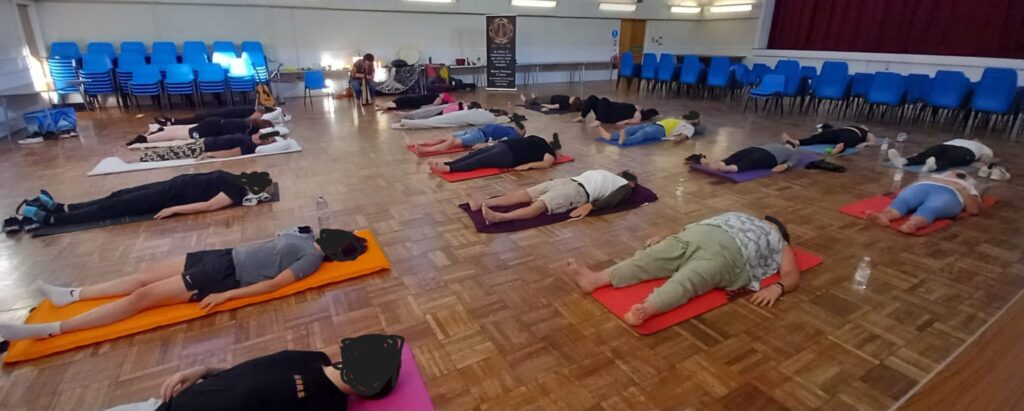
The benefits of breathwork
Participants described feelings of unity, bliss, and euphoria, suggesting breathwork may offer a safe, natural alternative to psychedelics in mental health treatment.
Breathwork While Listening to Music
Breathing exercises performed to music may bring about feelings of deep bliss, while also altering blood flow in areas of the brain involved in processing emotions. This finding comes from a study published recently in the open-access journal PLOS One by Amy Amla Kartar of the Colasanti Lab in the Department of Clinical Neuroscience at Brighton and Sussex Medical School, U.K., and her colleagues. The research showed that these changes can take place even when the body shows signs of a stress response, and they are linked with a reduction in reported negative emotions.
In recent years, breathwork has become increasingly popular as a way to ease psychological distress. Certain approaches that involve faster or deeper breathing, often paired with music, can create altered states of consciousness (ASCs) similar to those brought on by psychedelic drugs. One form, known as high ventilation breathwork (HVB),
may provide a drug-free option for achieving these effects, with fewer legal and ethical barriers to widespread use in therapy. Despite its growing appeal, the biological processes and personal experiences behind HVB-induced ASCs have not been studied in depth.
Exploring Altered States of Consciousness
To address this gap, Kartar and her team investigated how HVB produces ASCs in people with experience practicing the technique. They collected self-reported data from 15 online participants, 8 in-lab participants, and 19 who underwent magnetic resonance imaging. Each person completed a 20- to 30-minute session of continuous, rhythmic breathing set to music. Within half an hour after the session, participants filled out questionnaires describing their experiences.
The results showed that the intensity of ASCs evoked by HVB was proportional to cardiovascular sympathetic activation, as indicated by a decrease in heart rate variability, indicating a potential stress response. In addition, HVB-evoked ASCs were associated with a profound decrease in blood flow to the left operculum and posterior insula – brain regions implicated in representing the internal state of the body, including breathing. To read the full article please click below.